Archaeologists Claim They're One Step Closer to Proving the Bible True
 By Adam Clark Estes | The Atlantic Wire – 5 hrs ago
RELATED CONTENT
- Archaeologists Claim They're One …
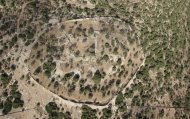
A bundle of new discoveries on a rocky hill in Israel may upend the community of Biblical historians struggling to understand Judah in the time of King David. Professor Yosef Garfinkel from the Hebrew University of Jerusalem and a team of archaeologists have been excavating the ancient city of Khirbet Qeiyafa, and have recentlyunearthed a trio of cultic shrines that date back to the time of King David. Along with stone and metal tools, pottery and art objects, the site provides the first evidence of a cult at the time of King David. Based on the archaeologists' analysis, the religious practices of the cult also match the traditions described in the Bible.
"This is the first time that archaeologists uncovered a fortified city in Judah from the time of King David. Even in Jerusalem we do not have a clear fortified city from his period. Thus, various suggestions that completely deny the biblical tradition regarding King David and argue that he was a mythological figure, or just a leader of a small tribe, are now shown to be wrong," Garfinkel told Israel's Ministry of Foreign Affairs. He explained that radiometric measurements performed at Oxford dated the artifacts to around 1020 to 980 BC, 30 to 40 years before the construction of King Soloman's temple. "Over the years, thousands of animal bones were found, including sheep, goats and cattle, but no pigs. Now we uncovered three cultic rooms, with various cultic paraphernalia, but not even one human or animal figurine was found. This suggests that the population of Khirbet Qeiyafa observed two biblical bans - on pork and on graven images - and thus practiced a different cult than that of the Canaanites or the Philistines."
Of course, not everybody buys Garfinkel's conclusions about the findings. Hershel Shanks, editor ofThe Biblical Archaeology Review, called the discovery of the shrines "extremely interesting" in an interview with the Christian Post on Tuesday, but added, "The unfortunate thing is we don't have enough information ... to be all confident of the conclusions that Yosef Garfinkel is drawing." Skepticism over the meaning of the discoveries at Khirbet Qeiyafa is not a new thing. Other archaeologists have been arguing against the significance of Garfinkels findings at Khirbet Qeiyafa for years, pointing out how the inscriptions found in the fortified city fail to mention David and linking the community to Biblical narrative simply amounts to wishful thinking.
Does that mean that it's impossible to link the findings at Khirbet Qeiyafa to the Biblical narrative? Not at all. Garfinkel needs to publish his findings and then the professors can joust it out in the academic arena. In the meantime, the good book just got a little bit more topical.
Comments
Post a Comment